
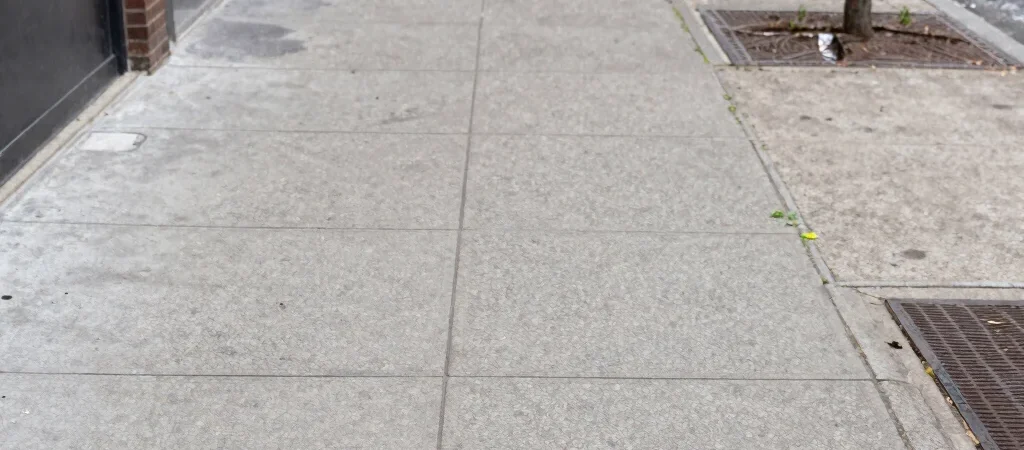
A commute does not begin when the train doors open or the car pulls into traffic. It may begin with a few blocks on foot: past a driveway, across an uneven stretch of concrete, and down a curb ramp partly blocked by a parked vehicle. Those details decide whether the route works before the main trip even starts.
The gaps matter most
A sidewalk can be present on most of a block and still fail as a route if it disappears at a busy intersection or ends before a transit stop. People using wheelchairs, pushing strollers, carrying bags, or walking with limited balance may have fewer ways to work around a gap. A connected path is more useful than a collection of isolated paved sections.
Curb ramps, crossings, and clear walking space are part of that connection, not decorative additions. In the United States, accessibility requirements shape how public routes are designed, though the condition of a particular sidewalk depends on local planning, maintenance, and responsibility for the property. A route that looks simple on a map can feel very different at street level.
Maintenance is design too
Roots can lift panels; winter weather can leave snow at a crossing; a utility repair can interrupt a path. Some problems call for long-term reconstruction, while others depend on regular clearing, repair, or enforcement of rules about keeping walkways open. The distinction matters because a well-designed sidewalk can become difficult to use when routine maintenance slips.
Responsibility is not always straightforward. Depending on local rules, a city, property owner, or another agency may be responsible for different stretches or repairs. For residents, documenting the location and reporting a specific obstruction or break is often more useful than describing the whole neighborhood as inaccessible.
Follow the whole trip
Try tracing one everyday journey on foot, from the front door to a bus stop, school, or grocery store. Look for the places where the walking space narrows, the curb ramp is missing, or traffic makes crossing uncomfortable. This is a simple way to see the route as a sequence rather than judging each block on its own.
Sidewalks rarely attract the attention given to bridges or transit lines, but they connect people to both. A clear, continuous path is basic transportation infrastructure, especially for anyone whose trip cannot start behind a steering wheel. The practical question is not only whether a sidewalk exists, but whether someone can follow it all the way where they need to go.